Tides
High and low turning points are NOAA CO-OPS predictions, datum MLLW, station local time (PDT/PST), fetched from api.tidesandcurrents.noaa.gov/api/prod/datagetter.
The Santa Cruz station is a subordinate station: NOAA publishes only its turning points, derived from Monterey with published time and height offsets. There is no NOAA 6-minute curve for it. The curve drawn here maps Monterey's own 6-minute predictions onto NOAA's published Santa Cruz turning points, limb by limb, so it passes through the published numbers exactly while carrying a real tide's asymmetric shape.
Days outside the cached detail set fall back to a half-cosine fit between turning points. The chart says so underneath itself when that happens.
The brief's tide numbers and NOAA's disagree
The research brief this site was built from lists tide numbers that NOAA's current predictions do not reproduce. The differences are shown below, computed rather than transcribed.
This site shows NOAA's numbers, because NOAA is the authority the brief itself names, and because NOAA's figures are internally consistent with its own published subordinate-station offsets. The brief's figures could not be reproduced from NOAA data by any documented method.
The difference changes no conclusion. The evening low is still a fair, upper-and-mid-intertidal tide; the window is still late afternoon into evening; the deep minus tides in early September are still in the middle of the night.
Station 9413745 (Santa Cruz, Monterey Bay). Brief figures from its section 1.2; NOAA fetched 2026-08-29.
| Day | Brief | NOAA | Diff |
|---|
| Sat Aug 29 low |
5:28 AM
0.19 ft |
5:42 AM
0.35 ft |
+14 min
+0.16 ft |
| Sat Aug 29 high |
12:15 PM
4.69 ft |
12:05 PM
4.63 ft |
-10 min
-0.06 ft |
| Sat Aug 29 low |
5:47 PM
1.40 ft |
5:50 PM
1.54 ft |
+3 min
+0.14 ft |
| Sat Aug 29 high |
11:54 PM
4.67 ft |
11:51 PM
4.83 ft |
-3 min
+0.16 ft |
| Sun Aug 30 low |
5:53 AM
0.62 ft |
6:09 AM
0.76 ft |
+16 min
+0.14 ft |
| Sun Aug 30 high |
12:38 PM
4.95 ft |
12:31 PM
4.88 ft |
-7 min
-0.07 ft |
| Sun Aug 30 low |
6:27 PM
1.08 ft |
6:37 PM
1.29 ft |
+10 min
+0.21 ft |
| Mon Aug 31 high |
12:42 AM
4.34 ft |
12:39 AM
4.41 ft |
-3 min
+0.07 ft |
| Mon Aug 31 low |
6:20 AM
1.16 ft |
6:36 AM
1.25 ft |
+16 min
+0.09 ft |
| Mon Aug 31 high |
1:06 PM
5.20 ft |
1:00 PM
5.12 ft |
-6 min
-0.08 ft |
| Mon Aug 31 low |
7:14 PM
0.83 ft |
7:31 PM
1.06 ft |
+17 min
+0.23 ft |
| Sat Sep 12 low |
5:28 AM
0.48 ft |
5:31 AM
0.69 ft |
+3 min
+0.21 ft |
| Sat Sep 12 high |
12:04 PM
5.12 ft |
11:49 AM
5.17 ft |
-15 min
+0.05 ft |
| Sat Sep 12 low |
6:01 PM
0.56 ft |
6:03 PM
0.78 ft |
+2 min
+0.22 ft |
| Sun Sep 13 low |
6:01 AM
1.12 ft |
6:02 AM
1.27 ft |
+1 min
+0.15 ft |
| Sun Sep 13 high |
12:30 PM
5.16 ft |
12:20 PM
5.24 ft |
-10 min
+0.08 ft |
| Sun Sep 13 low |
6:44 PM
0.49 ft |
6:51 PM
0.68 ft |
+7 min
+0.19 ft |
| Worst | 17 minutes, 0.23 ft |
|---|
Sunrise and sunset
Computed locally with the NOAA solar position algorithm at each destination's own coordinates. No network call, no dependency, about forty lines of arithmetic.
It reproduces the brief's stated sunrise and sunset for the trip day at Santa Cruz exactly.
Quality bands
Below 0.0 ft excellent, 0.0 to 1.0 good, 1.0 to 2.0 fair (upper and mid intertidal only), above 2.0 poor. Threshold guidance from Friends of Fitzgerald Marine Reserve.
Every band is cross-checked against daylight and against the park gate hours before it is applied. That is why a deep minus tide at 3 AM is rated unusable here rather than excellent: the number is real and you cannot stand on it.
How the next-trip ranking scores a day
A day's score is the integral of (2 ft minus the water level) over the part of the day that is both daylight and inside the park's opening hours, in foot-hours. In plain terms: how much rock is out, for how long, while you can actually be there.
This is why a deeper low half an hour before sunset can lose to a shallower one with two hours of light on it.
Creature likelihood
The creature list, the kid-readable clues and the reliable/long-shot split are all from the research brief.
The per-creature emergence height that lets likelihood respond to any date's tide is derived, not researched. It turns the brief's prose zones into a number, calibrated so that on this trip's tide every creature lands in exactly the bucket the brief puts it in.
Illustrations
Drawn by hand as SVG paths in this repository. No photographs, nothing scraped, nothing to license.
Type
The system font stack, so nothing is fetched from a CDN and nothing needs self-hosting. The reason is the deadline: this site has to be service-worker cached onto two phones tonight, and a webfont is tens of kilobytes of precache buying nothing that the fonts already on those phones do not already do at small sizes in bright light. If a display face is ever added it must be SIL OFL licensed and self-hosted with its licence file.
Marked unverified in the code and on the page:
- unverified Santa Cruz weather — TODO: unverified — climatological, not a forecast. BRIEF.md 1.10 states a Santa Cruz-specific point forecast could not be pinned down. Do not treat this as a forecast. To wire up a real one, use the NWS point forecast for 36.9741, -122.0308 rather than hardcoding.
- unverified Roaring Camp Railroads — TODO: unverified — BRIEF.md 1.6 gives no ticket price for Roaring Camp.
Sources that disagree, left unresolved on purpose:
The brief asks that conflicts be surfaced rather than silently resolved.
- Natural Bridges State Beach: 8:00 AM to 8:00 PM vs 8 AM to sunset. The tide engine clips the usable window at 8:00 PM AND at sunset, whichever comes first, so the conflict cannot make the site optimistic.
- J.V. Fitzgerald Marine Reserve: Google lists 8 PM vs Friends of Fitzgerald lists 7 PM for August, and 8 PM for September through Labor Day. Shown side by side. Not resolved.
Forest hunt provenance
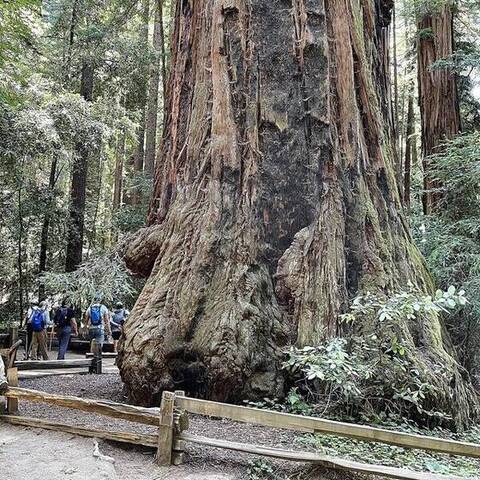
The original brief supports exactly ONE forest organism: 'Banana slugs common' (1.6, Henry Cowell). Every other forest item here is STRUCTURAL or BOTANICAL -- a feature of an old-growth coast redwood grove, not a wildlife sighting. They are phrased as 'look for', never as 'you will see', and no animal has been added beyond the banana slug the brief names. This is deliberate: the brief's no-invented-facts rule governs hardest on animals, because a promised animal that does not appear is a disappointed child.
.jpg)
.jpg)


_(3108615732).jpg)


.jpg)


.jpg)

.jpg)

_(87b6176b-0dfe-4f29-8a7c-d7abd964c729).jpg)
.JPG)
_01.jpg)


_(9500e317-460a-4cd1-8d8b-173d83fd6109).jpg)
_(ebc86900-eef7-4687-a50f-b522c2391f0e).jpg)


.jpg)
_(3bf836c4-094b-44b3-8bd6-809859f97012).jpeg)


.jpg)

.jpg)


.jpg)
.jpg)
.JPG)


.jpg)
.jpg)
_are_the_only_flowering_plants_to_have_migrated_back_to_the_water_from_the_terrestrial_realm_(ed8ceb88-155d-4519-3e57-c4bf248452b7).jpg)


.jpg)
.jpg)


_(6958783772).jpg)
_-_Flickr_-_brewbooks.jpg)
_001.jpg)
_(4-3-08)_coon_creek_-1_(2385892077).jpg)


.jpg)


.jpg)